

Corse, attese e rientri
Considera l’intera operatività della flotta.
Professional mobility
For chauffeur services, transfers, cars with driver and light fleets: start from real consumption, estimate operational CO₂ and build a documentable commitment.

This calculator is reserved for chauffeur cars and light vans. Buses, coaches and boats follow separate paths.
Considera l’intera operatività della flotta.
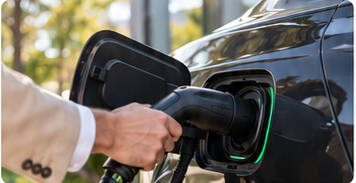
Usa i consumi effettivi di ogni veicolo.
Offsetting complements emission reduction. A calculator result does not prove that offsetting took place.
Aggiungi i veicoli e inserisci i dati del periodo scelto.
Percorrenze e consumi, con fattori di emissione e fonti consultabili.
For fuels: annual km × consumption per 100 km ÷ 100 × kg CO₂ factor per litre or kg. For electric: annual km × kWh per 100 km ÷ 100 × Italian kg CO₂/kWh factor. With actual annual consumption, we multiply that figure directly by the factor.
If you use kilometres, also include empty runs. If you use annual consumption, include fuel or energy from waiting and idling.
It does not include fuel extraction and distribution, vehicle or battery manufacturing, maintenance and infrastructure. It is not a life cycle analysis.
The ISPRA source measures CO₂: to avoid mixing different boundaries, we use the direct CO₂ component of the DESNZ factors and call the result CO₂, not full CO₂e.
For petrol, diesel, LPG and methane we use the DESNZ 2026 direct combustion factors. These are UK figures used as a proxy, not vehicle-specific factors. For electric we use the final Italian national consumption for 2024 from ISPRA: 192.6 g CO₂/kWh, converted into 0.1926 kg CO₂/kWh; the 2025 preliminary value is not adopted.
| Fuel type | Factor | Year and geography | Boundary | Source |
|---|---|---|---|---|
| Benzina | 2,06107 kg CO₂/l | 2026 Regno Unito (proxy) | CO₂ diretta, combustione | DESNZ 2026, flat file «ghg-conversion-factors-2026-flat-format-revised.xlsx», foglio «Factors by Category», ID 1_101_1017_8_2 (kg CO₂e of CO₂ per unit); verificato sul file ufficiale il 2026-09-15 |
| Diesel | 2,55035 kg CO₂/l | 2026 Regno Unito (proxy) | CO₂ diretta, combustione | DESNZ 2026, flat file «ghg-conversion-factors-2026-flat-format-revised.xlsx», foglio «Factors by Category», ID 1_101_1011_8_2 (kg CO₂e of CO₂ per unit); verificato sul file ufficiale il 2026-09-15 |
| GPL | 1,55491 kg CO₂/l | 2026 Regno Unito (proxy) | CO₂ diretta, combustione | DESNZ 2026, flat file «ghg-conversion-factors-2026-flat-format-revised.xlsx», foglio «Factors by Category», ID 1_100_1003_8_2 (kg CO₂e of CO₂ per unit); verificato sul file ufficiale il 2026-09-15 |
| Metano (CNG) | 2,50268 kg CO₂/kg | 2026 Regno Unito (proxy) | CO₂ diretta, combustione | DESNZ 2026, flat file «ghg-conversion-factors-2026-flat-format-revised.xlsx», foglio «Factors by Category», ID 1_100_1001_15_2 — CNG, tonnes, 2502,68 kg CO₂e of CO₂ per tonnellata, qui espresso per kg (÷1000); verificato sul file ufficiale il 2026-09-15 |
| Elettrica | 0,1926 kg CO₂/kWh | 2024 definitivo Italia, consumo nazionale | CO₂ della produzione elettrica consumata | ISPRA, Rapporto 430/2026 — allegato «FE_energia_elettrica_2025-V2.xlsx», foglio «9», colonna «Consumi elettrici», riga anno 2024 (192,595 g CO₂/kWh); verificato sul file ufficiale il 2026-09-15 |
Il risultato aiuta a definire il percorso.
Contributi e documentazione vengono verificati separatamente.

Costruiamo insieme il prossimo passo.